
In so much of our careers and lives, we spend a lot of time aiming to get things “right”.
∞ Right decision
∞ Right career move
∞ Right relationship
∞ Right timing
∞ Right version of ourselves
And I am no exception. I’ve been a card-carrying member of the “good girl” club for quite a few decades now! Always trying to get things right.
And yet, when you look back on the moments that shaped you most, it’s rarely the ones where everything went perfectly. More often, it’s the messy ones. The wrong turns. The failed attempts. The awkward conversations. The things that didn’t work out the way you hoped. Times when your intention and impact didn’t quite line up. The moments that taught you something.
I’ve been thinking a lot lately about mistakes, imperfection, and when things didn’t go as planned (you know, the stuff you hadn’t dreamed of) – and how much energy we waste trying to avoid them. As if making a mistake or going through something unpleasant means something has gone wrong, rather than something has simply gone real.
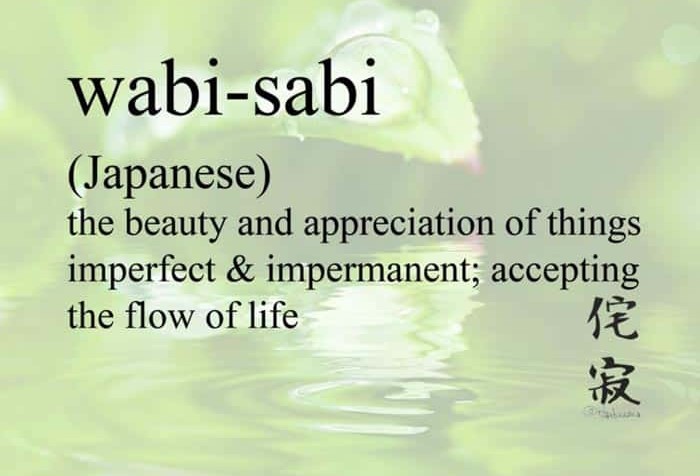
There’s a beautiful Japanese concept called Wabi-sabi, which is about finding beauty in imperfection, impermanence and incompleteness.
And an even more beautiful practice called Kintsugi – the art of repairing broken pottery with gold. Instead of hiding the cracks, they highlight them. The piece becomes more valuable, not less, because of what it’s been through.
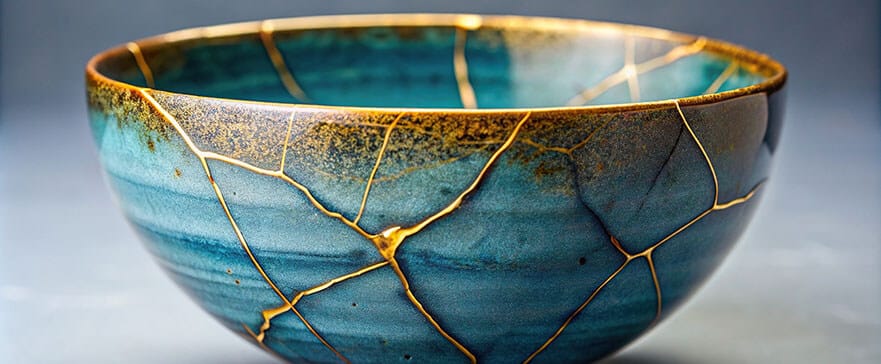
I love that metaphor for life.
Because we’re all a little cracked. A little chipped. We’ve been through some tough times. And we are piecing it all back together with invisible gold. And yet, somewhere along the way, we decided that imperfection is something to hide.
The contradiction we live in
On one hand, we encourage and in many instances, celebrate the “fail fast” culture. We talk about innovation, experimentation, growth mindset. We tell people to take risks, back themselves, try new things.
But then on the other hand, we live in a world where mistakes are edited out of the highlight reel. Everywhere we look, social media shows the outcome, not the process. The success, not the struggle. The polished version, not the messy middle. And so, we quietly absorb the message that if it didn’t work, if it wasn’t smooth, if it wasn’t impressive – maybe it shouldn’t be shared at all. That maybe we should hide this.
No wonder so many people feel like they’re the only ones getting it wrong.
Brené Brown writes beautifully about this in her work on vulnerability and imperfection. She reminds us that you cannot have courage without uncertainty, and you cannot have growth without discomfort. The very things we try to avoid are the things that allow us to expand.
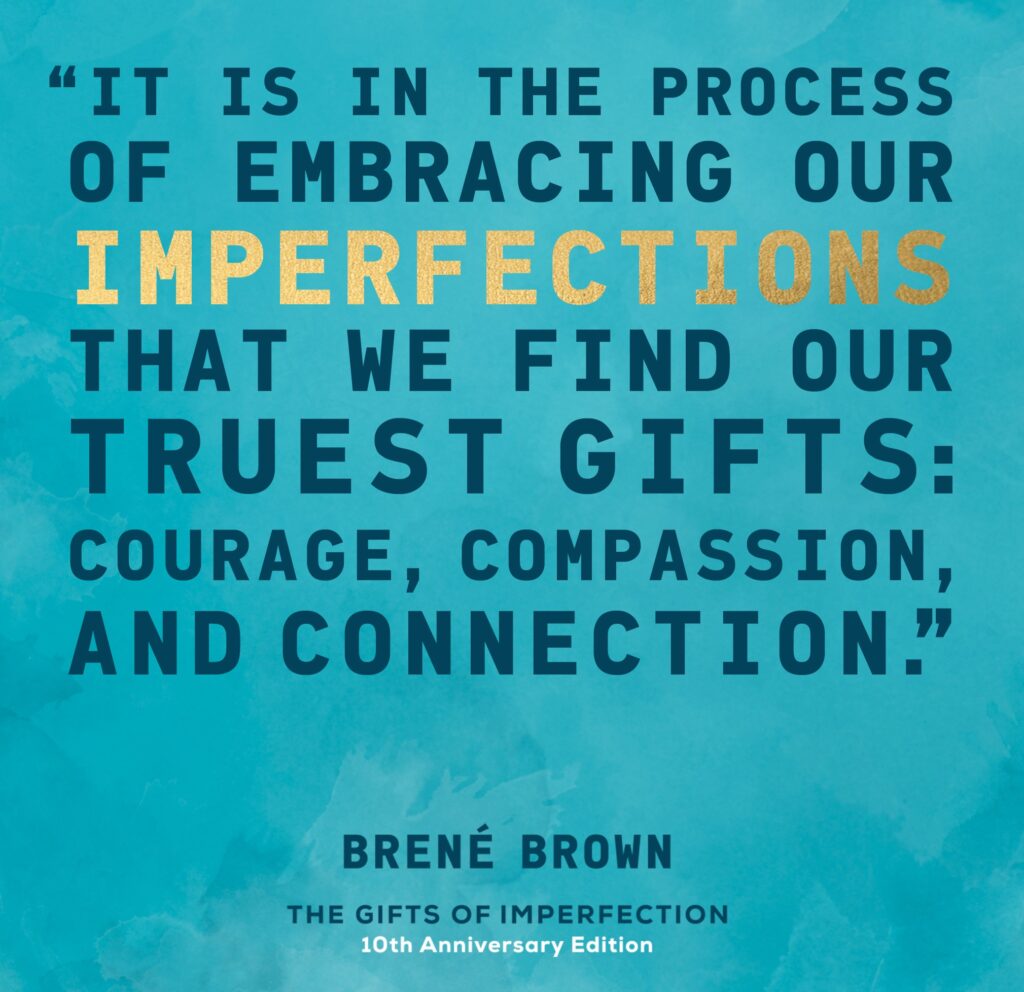
Which leads me to one of my favourite (and slightly uncomfortable) beliefs:
If you’ve never failed at anything, you’ve probably never really lived.
Or at least, you’ve never really stretched yourself.
Comfort zones are lovely. And also dangerous.
There’s nothing wrong with being comfortable. But comfort zones are where dreams quietly go to die. They feel safe, predictable, and manageable. But they don’t grow you.
Every meaningful thing I’ve ever done – personally or professionally – involved some level of not knowing what I was doing. Starting something before I felt ready. Saying yes before I had all the answers. Making decisions that didn’t come with a guarantee. At work (agreeing to pack up my family, move to London and become the Global Mining & Metals accounting leader), at home (becoming a mum). And yes, sometimes getting it wrong (lots of time getting it wrong).
But here’s they perspective that has changed everything for me:
There are no wrong decisions. Only decisions that give you data.
If you try something and it doesn’t work, that’s not failure. That’s information.
Which brings me to a relevant analogy…The buffet theory of life
Imagine you’re at a buffet and you decide to try the salmon. You take one bite and realise you don’t like it.
Did you make the wrong decision? No. You learned something.
You learned you don’t like salmon. Or maybe you don’t like that salmon. Or maybe you don’t like it yet. Either way, the next time you’ll probably try the chicken.
That’s how life works too.
∞ Trying a job and realising it’s not for you.
∞ Starting a relationship and learning what you need (and don’t need).
∞ Launching a project that doesn’t land the way you hoped.
It’s not a verdict on you.
It’s just data for your next choice.
Grit, quitting and knowing when to let go (and when to flow)
There’s a well-known Japanese proverb:
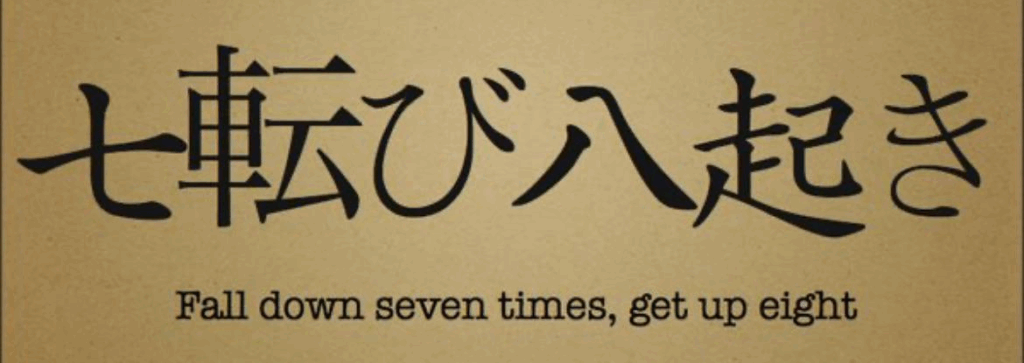
I love the spirit of that: resilience matters; persistence matters; grit matters.
But so does wisdom.
Sometimes growth isn’t about pushing harder – it’s about pivoting. Knowing when to let go of something that no longer fits. Changing direction instead of forcing an outcome.
Bruce Lee captured this beautifully with his famous idea of “be like water.” Water doesn’t fight the rock. It doesn’t argue with the obstacle. It adapts.
∞ Sometimes water is powerful – it wears mountains down over time.
∞ Sometimes it’s gentle – it flows around what’s in its way.
∞ Sometimes it changes form completely – becoming ice, steam, mist.
Water doesn’t insist on one path. It finds a path.
And I think that’s one of the most underrated forms of strength:
∞ Not always bouncing back.
∞ Not always breaking through.
∞ But knowing when to flow forward, when to soften, when to redirect your energy into something that fits who you are now – not who you were trying to be.
The trick isn’t never failing. The trick is learning when to persist, and when to evolve.
Both require courage.
One just looks louder than the other.
Failure is a brilliant teacher (even if it’s a harsh one)
Some of the greatest inventions in the world came from “failed” experiments.
∞ Post-it Notes were created when a scientist at 3M tried (and failed) to make a super-strong adhesive – and accidentally made a weak one instead.
∞ The Wright brothers crashed more times than they flew before they ever got off the ground.
∞ Penicillin was discovered because someone didn’t clean up properly.
Failure isn’t the opposite of success. It’s usually the path to it.
What if we stopped treating mistakes as personal flaws?
What if we saw them for what they really are:
∞ Evidence that you tried
∞ Proof that you stretched
∞ Data about what works and what doesn’t, what you like and what you don’t
∞ A sign you’re learning in real time
Not a judgement. Not a label. Not a story about your worth. Just information.
A great quote from a great man – Nelson Mandela, supports this view:
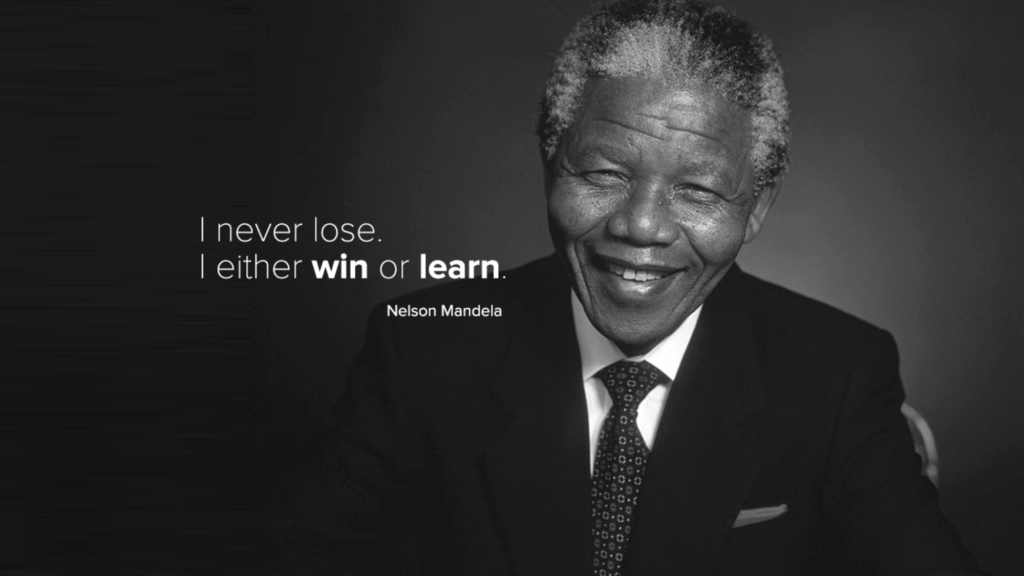
I think that’s a pretty good philosophy for life too.
Closing thought
Perfection is a myth. A beautifully marketed one – but a myth nonetheless.
Life isn’t about getting it right the first time. It’s about being willing to try, reflect, adjust and try again.
Your mistakes are not a sign that something is wrong with you. They’re a sign that you’re alive, engaged, evolving.
So the next time something doesn’t work out, instead of asking:
“Why did I mess this up?”
Try asking:
“What did this just teach me?”
Because sometimes the gold isn’t in avoiding the cracks.
It’s in how you choose to repair them and what to learn from them.
About “The Power of…” series
These newsletters are a way for me to share practical reflections, tools and ideas on what really matters – the small shifts that make a big difference to career, life and legacy.