
What really matters in a life? Is it what we achieved? The impact we had? Or is it far more simply… the contribution we made?
For most of my life – long before I knew I would one day talk it and teach it – I’ve believed that effort and contribution matter more than output and outcomes. Not because outcomes don’t matter, but because you cannot always control them. You can, however, control how you show up, the intention you bring, and the quality of your effort.
As 2025 draws to a close, many of us will look back and measure our year by output: what we did, what we delivered, what we achieved. And some may judge themselves on the impact they had.
But impact is tricky. You can’t control impact. You can’t guarantee an outcome. You don’t get to choose how others perceive you. You don’t get to dictate how your actions land. You can influence, shape, guide – but you can never fully own the effect you have on other people or the world.
What you can control is your contribution.
And contribution lives entirely in your domain. How you show up, the intention you bring, the care you offer, the effort you make, the energy you bring. Everything else is outside your hands.
Impact lives in someone else’s domain – their lens, their experiences, their interpretation, their timing.
This is the heart of contribution:
I am responsible for what I give, not for how others receive it.
This idea shows up everywhere once you start paying attention.
∞ Ben Crowe (one of the world’s most sought-after performance coaches)
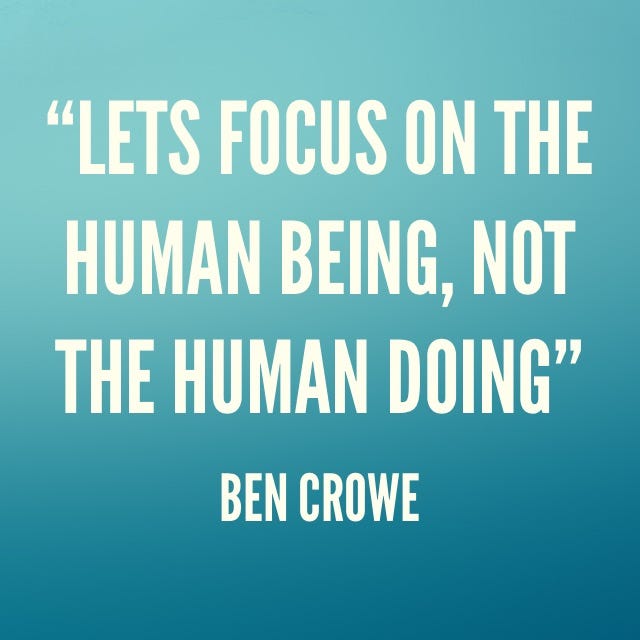
Reminding us that worth is not built on achievement but on presence, connection and contribution.
∞ Matthew McConaughey frames it beautifully:

Meaning, if your contribution was honest, kind, thoughtful and grounded in your values, you can sleep soundly – regardless of the outcome.
∞ Mel Robbins’ Let Them theory takes this even further and helps separate what belongs to us and what belongs to others.
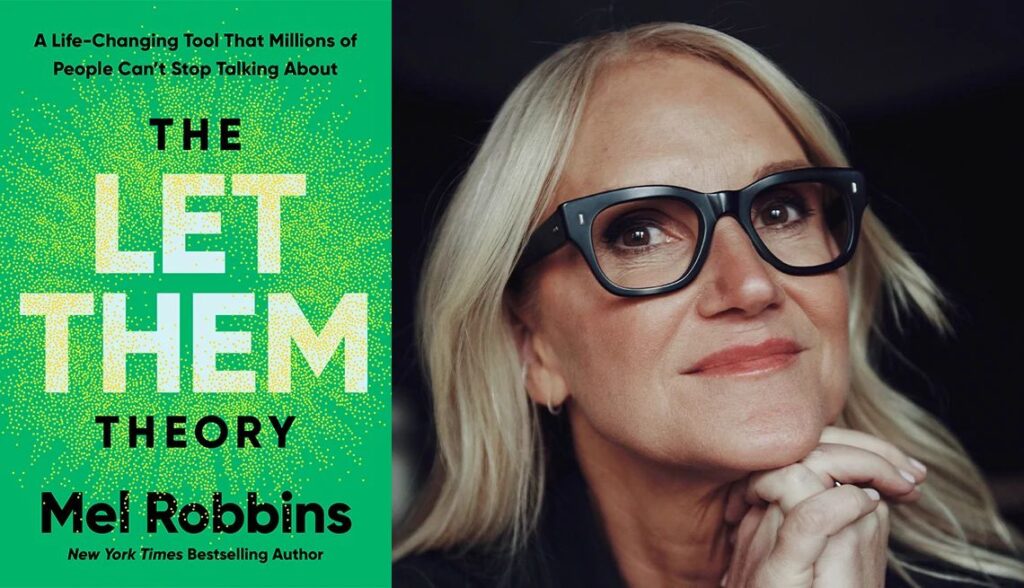
You contribute what you can – your effort, your authenticity, your compassion – and then you let people respond however they respond. You let them think what they think. You let them be who they are. You release the need to manage their reaction. Because impact is their story, not yours. (And don’t forget the “Let Me” part of this theory – but that’s a discussion for another day). This doesn’t mean contribution and impact are mutually exclusive. They’re deeply connected. It simply means you are only responsible for one of them.
Contribution does have to be the big stuff. More often, it’s the small things done consistently.
When we talk about contribution, we often default to the grand, remarkable, headline acts. But what if real contribution lives in the small, unnoticed, unglamorous moments? The everyday leadership? The moments that accumulate?
∞ Holding the door open.
∞ Sending the message (even when the person doesn’t always respond back).
∞ Smiling at someone who needed it (and that includes strangers).
∞ Asking, genuinely, “Are you okay?”
∞ Giving someone a hug and holding on just a little longer to let them know you are there for them.
∞ Offering patience when someone or something is difficult and letting them know that you are not going anywhere.
∞ Choosing kindness when the situation may tempt you to respond less positively.
Drew Dudley’s famous TED Talk “Everyday leadership” calls these “lollipop moments” – the small, seemingly insignificant things we do that change someone’s life … and sadly, we often never know it.
There are people walking around today whose lives are better because you crossed their path. You just don’t know it.
That’s the power of contribution.
Contribution versus Impact: The Research
Social psychology and behavioural science both reinforce some core truths:
∞ We have full control over our contributions – our effort, our behaviour, our intention.
∞ We have limited control over our impact – the outcome is shaped by others’ perceptions, histories, filters, needs and timing.
Research from Stanford’s Carol Dweck, Harvard’s Robert Kegan and leadership researchers like Kouzes & Posner, all point to the same relationship principle:
You can’t control external response; you can only control internal responsibility.
Leaders who focus on contribution (inputs) rather than impact (outputs) experience:
∞ Less stress
∞ Greater wellbeing
∞ Higher resilience
∞ Greater connection
∞ Higher authenticity
∞ More sustainable performance
Because contribution is stable – when you operate from contribution, you’re anchored.
Whereas impact is variable – when you operate from impact, you’re exposed.
As the year closes… pause.
December brings pressure: deadlines, full inboxes and calendars, crowded shops, lists that never seem to shrink.
But somewhere in the busyness, find a quiet moment to sit down – truly sit – and reflect on your year.
∞ Not through the lens of achievement.
∞ Not through the lens of output.
∞ Not through the lens of impact alone.
∞ But through the lens of contribution.
Ask yourself – what did I contribute this year – to my family, my friends, my colleagues, my community, and myself?
∞ How did I show up?
∞ Where did I choose kindness?
∞ Where did I offer insight, patience or courage?
∞ Who did I support, even in small ways?
∞ What did I bring to the rooms I walked into?
∞ What did I give that mattered – even if no one said it out loud?
Because you can’t always control the impact.
But you can always control the contribution.
And contribution is where fulfilment and meaning live.
Practical ways to focus on contribution (not impact)
∞ Shift the question: from “What did I achieve?” to “Did I show up how I wanted to?”
∞ Set contribution intentions: “Today I will contribute clarity / kindness / calm / courage.”
∞ Detach from outcome: remind yourself “Their reaction is not my responsibility.”
∞ Stay open: impact still matters – but it’s revealed over time, not controlled in the moment.
∞ Celebrate micro-contributions: the tiny, human moments that ripple outward. The ones you gave to others, and that others gave to you. In fact: when was the last time you told someone (who made a difference in your life) “thank you”, or “I appreciate you”?
∞ Reflect weekly: “Where did I contribute meaningfully this week?”
Closing thought
Contribution isn’t the opposite of impact.
It’s the birthplace of impact.
Most of it is invisible, unmeasured, unspoken. But it is felt, deeply.
Your contribution this year – seen and unseen – has mattered.
As you step into the holidays and look toward 2026, perhaps the most powerful question you can ask isn’t:
“What do I want to achieve?” or “What impact do I want to have?”
but instead:
“How do I want to contribute?”
Because contribution is the legacy we create every day – with our words, our behaviours, our choices, our presence and our humanity.
And sometimes, the smallest contributions become the ones that change everything.
About “The Power of…” newsletter series
These newsletters are a way for me to share practical reflections, tips and tools on what really matters – the small shifts that make a big difference for career, life and legacy.