They say “it takes a village to raise a child.” Well, I’ve learned recently that it also takes a village to help care for ageing parents with a serious illness.
You may (or may not) have noticed that I’ve been a little quieter here over the past few weeks. Life has been happening – deeply, painfully, beautifully – and I’ve needed to step back while navigating something incredibly personal. My mum, who has advanced Parkinson’s and Parkinson’s-induced dementia, has reached a stage where we’ve had to make some very difficult decisions about her care.
If you know me, you’ll know my mum was a fiercely independent, strong and capable woman – and yes, I’m definitely a chip off the old block. Watching someone like that slowly lose parts of themselves is something you can never fully prepare for.
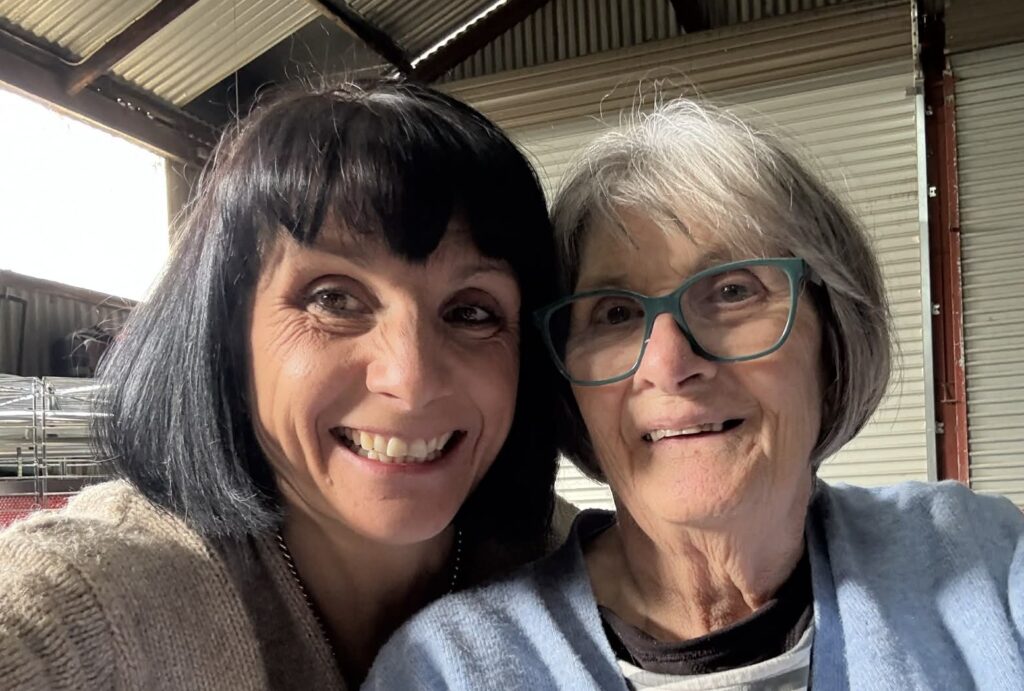
Our reality…
The only way I can describe the emotional journey is through a metaphor that came to me recently:
Caring for someone with dementia feels like surviving a shipwreck in slow motion
There’s the initial impact – the moment you realise they are truly changing – and it knocks the wind out of your lungs. Then come the waves: the day-to-day losses, the forgotten memories, the subtle disappearances of the person you once knew. You barely get your footing before the next wave hits.
You learn to bail water, patch holes, hold onto the rail, breathe between storms and the waves. And just as the sea calms, another storm forms on the horizon – the move into care, the shifting family dynamics, the anticipatory grief of knowing the final storm will come.
It’s not one grief. It’s many. A whole season of storms.
And you keep going – not because it’s easy, but because love refuses to abandon the ship.
These past few weeks have been some of the hardest of my life.
The conflict between my head and my heart has been immense:
∞ HEAD: knowing what’s logical, right, safe and necessary for Mum’s declining condition. The forms we need to fill out. Dealing with the unchangeable facts of our situation and navigating it all.
∞ HEART: the heartbreak of grieving her in stages, watching my dad feel lost and sad, and reassuring him – over and over – that finding the best care is looking after his wife.
And through all of this… I’ve had to ask for help.
A lot of help.
Which is why I use the word “village” deliberately.
Because my support hasn’t just come from family – it has come from everywhere: old friends, new friends, neighbours, colleagues, gym buddies. Even random strangers who crossed my path at exactly the right moment and said something that made it “ok.”
And the support varied:
∞ Sometimes it was a simple “thinking of you” text.
∞ Sometimes it was a beautiful or funny meme.
∞ Sometimes it was dinner dropped at our door.
∞ Sometimes it was a glass (or two) of wine, talking – or not talking – about what was happening.
And when it came to our biggest fear, i.e., finding people who would care for our Mum with the same love that we do, this has been eased. Her current aged-care home is extraordinary. Kind, compassionate, genuinely invested people who treat her with dignity and compassion and care for her with expertise which exceeds ours. For that alone, I am endlessly grateful.
And while you wouldn’t expect there to be silver linings, there are. Special moments with my mum holding her hand remembering things when we can; getting closer to my siblings, and my dad – sharing tears, laughter, memories – being there for him is everything.
While to some, it may seem like a burden. For me… it is an absolute honour and privilege to be able to care for my parents and support them given everything they have done their whole lives to support me and my family.
Why it matters
There’s a reason the idea of a village appears in so many cultures – especially African cultures where the saying “a child does not grow up only in a single home” originated.
Modern research backs this up:
∞ We are wired for connection. Brené Brown often says that connection isn’t a luxury — it’s what gives purpose and meaning to our lives.
∞ Strong social relationships are one of the biggest predictors of wellbeing. A meta-analysis of 300,000+ people showed a 50% increase in survival for those with strong social connections.
∞ And in caregiving studies, informal support from family, friends and community is shown to have a protective effect, reducing stress, depression and burnout.
Your village isn’t just some nice to have emotional support – it’s a life- and sanity-saving one.
Jay Shetty (author of “Think like a Monk”) talks about the Circle of Love – the idea that when you put goodness into the world, it doesn’t always come back from the same place you gave it. Sometimes it returns through the most unexpected people. I’ve found this to be profoundly true.
Our family, especially my mum and my dad, have always put kindness, care and goodness into the world – and I’ve felt that circle return to us in so many beautiful, surprising ways.
Practical tips for building and nurturing your village
∞ Let people in. Your village can’t support you if you don’t open the door.
∞ Accept help without guilt. People want to show up for you.
∞ Stay connected – even in small ways. A “thinking of you” text can be a lifeline.
∞ Notice who shows up. Your village often includes people you didn’t expect.
∞ Be part of someone else’s village. Even the smallest gestures – a message, a meal, a moment – can make an enormous difference.
∞ Don’t underestimate strangers. Sometimes the kindest wisdom comes from someone who meets you without history or expectation.
A closing thought
Humans are hard-wired for connection.
We can be strong, resilient, independent AND still need others. In fact, sometimes the strongest thing we can do is ask for and accept help.
If you’re going through something tough, be open to the people who show up. You might be surprised who stands beside you in the storm.
To my own village – you know who you are – thank you.
I couldn’t have navigated this without you.
And truthfully… I couldn’t do life without you either.
About “The Power of…” newsletter series
These newsletters are a way for me to share practical reflections, tips and tools on what really matters – the small shifts that make a big difference for career, life and legacy.