
In a disjointed, fast-moving world that rewards intensity, speed and visible impact, the evidence tells a quieter story – trust, influence and meaningful connection are not built through dramatic moments done once, but through repeated, predictable behaviour over time.
In my previous edition of The Power of…, I wrote about The Power of … the Small things.
∞ The check-ins.
∞ The follow-ups.
∞ The remembered detail.
∞ The introduction made without expectation.
The seemingly ordinary moments that, over time, make all the difference in shaping our relationships. The science is clear: small positive interactions compound.
A few weeks ago, someone said to me:
“I don’t feel like people are less capable – I just feel like they’re less steady.”
It wasn’t a word I would normally use, but it did make me wonder.
Steady.
∞ Not louder.
∞ Not smarter.
∞ Not more visible.
Steady. But what did they mean?
It got me thinking more about the power of the small things…
∞ Small things, done once, are moments.
∞ Small things, repeated, become patterns.
And patterns create something far more powerful.
They create steadiness, or maybe a word that I relate more to… consistency.
However, the world we now live in with the hybrid schedules, back-to-back virtual meetings, constant digital communication – steadiness (or consistency) is no longer facilitated by proximity.
It must be reinforced by behaviour. Repeated behaviour. Behaviour that people actually take notice of.
What do I mean by consistency?
Consistency is not intensity.
∞ It is not one powerful conversation.
∞ It is not a single generous act.
∞ It is not showing up well once.
Consistency is small relational behaviours practiced repeatedly over time.
It is:
∞ Doing what you said you would do, and if you cannot, letting someone know that as soon as you know you cannot.
∞ Following through… again.
∞ Checking in… again – not just once. Even when there is no immediate gain. Even when they don’t always respond back.
∞ Responding when it would be easier not to.
∞ Treating people with the same respect across contexts and under pressure.
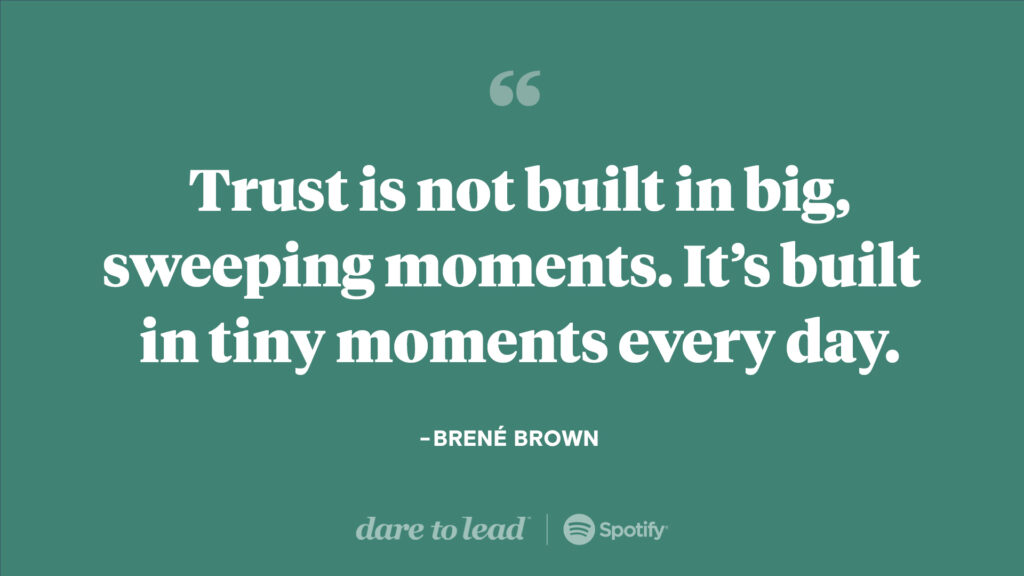
Trust rarely forms through one impressive interaction or in single moments. It forms in patterns and through predictability. And patterns and predictability are simply consistency experienced and observed over time.
And Brene Brown thinks along the same lines.
Why this matters now
In traditional office environments, modelling and reinforcement of human connection built into everyday behaviours.
∞ You passed people in corridors.
∞ You overheard conversations and context – you know, those “water cooler conversations” – there are lots of things I learned from overhearing a conversation (and I don’t mean secrets or eavesdropping!) I mean about work and how to approach situation, solve complex problems and so much more.
∞ You absorbed information and learned behaviours via osmosis, i.e., it tended to just sink in more.
∞ You observed and absorbed relationship skills through proximity (and I don’t mean just being co-located in the same room, I mean actually being near each other and being present).
Human interactions and genuine connection tended to occur more naturally, and hence trust was strengthened, through repeated experiences and exposure.
Today, much of that opportunity for exposure and reinforcement has disappeared. Which means human connection is no longer strengthened accidentally.
Physical separation, digital communication and the relentless pace mean many of our interactions are scheduled, compressed and outcome-driven.
If connection is left to chance, it weakens. So, it must be strengthened deliberately and consistently.
What the research says
Research supports this. Studies on trust formation show that reliability and behavioural predictability are stronger drivers of trust than competence alone (Dirks & Ferrin, 2002). Amy Edmondson’s research into psychological safety reinforces that people feel safe and collaborative when behaviour is consistent and fair over time.
In addition, the World Economic Forum continues to identify collaboration, empathy and social influence as critical capabilities in the future of work (WEF, 2023).
In other words:
∞ These capabilities are not built through intensity.
∞ They are built through deliberate behaviours.
∞ They are built through repetition and steadiness of those behaviours.
Where consistency breaks
Interestingly, consistency is often the first thing to fall away under pressure.
When we are busy:
∞ The follow-up is skipped.
∞ The check-in is delayed or postponed indefinitely.
∞ The relationship becomes transactional.
∞ The focus narrows to task completion.
It feels efficient. But inconsistency compounds – just as consistency does. And in fragmented environments, erosion happens quickly.
A story – that person you can rely on
I once worked with a colleague who wasn’t the loudest voice in the room. But he was steady.
∞ He followed up.
∞ He remembered conversations.
∞ He didn’t disappear when things became difficult.
∞ He showed up and treated people with the same respect regardless of hierarchy or contexts.
Over time, something interesting happened. People trusted him instinctively. Not because of one defining moment, but because of repeated small ones.
His influence wasn’t dramatic. It was cumulative.
Some questions worth considering
∞ Where are you steady?
∞ Where are you patchy?
∞ Who experiences you as predictable and reliable?
∞ Where does pressure cause you to narrow your relational focus?
∞ What small relational behaviour could you strengthen this month?
Not once but repeatedly.
Closing thought
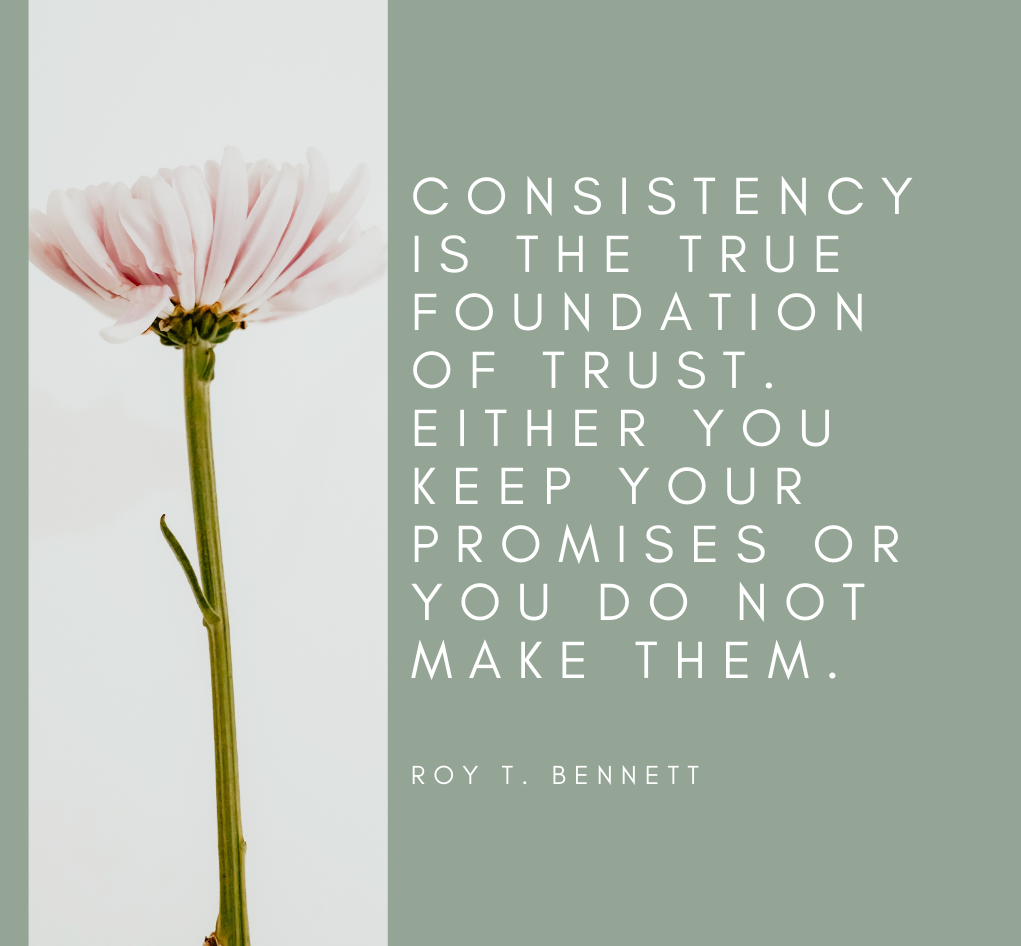
Trust is rarely built in dramatic moments. It strengthens – or erodes – through patterns.
The small things matter. But only when they are sustained.
In a fragmented world, consistency is not a personality trait. It is a practice.
About “The Power of…” newsletter series
These newsletters are a way for me to share practical reflections, insights and tools on what really matters – the small shifts that can make a big difference to career, life and legacy.