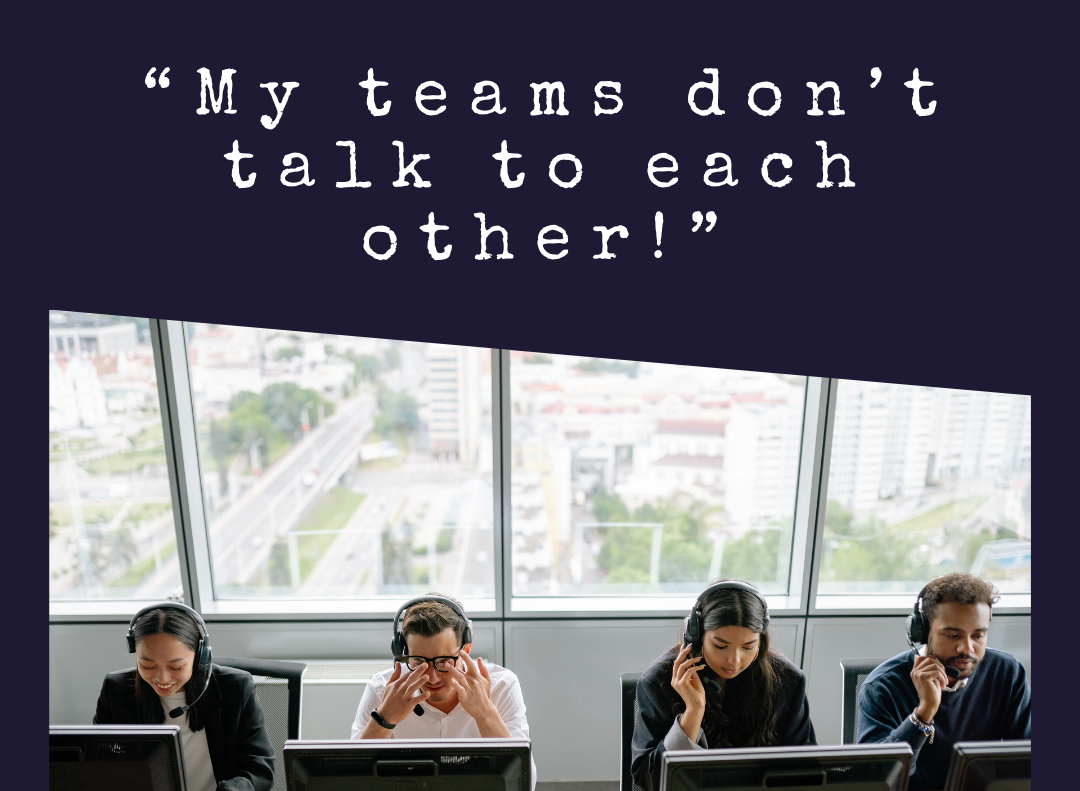
I hear this more often than you might think.
Not said angrily or dramatically. Just a statement of fact.
“𝘔𝘺 𝘵𝘦𝘢𝘮𝘴 𝘥𝘰𝘯’𝘵 𝘵𝘢𝘭𝘬 𝘵𝘰 𝘦𝘢𝘤𝘩 𝘰𝘵𝘩𝘦𝘳.”
“𝘞𝘦 𝘥𝘶𝘱𝘭𝘪𝘤𝘢𝘵𝘦 𝘸𝘰𝘳𝘬.”
“𝘋𝘦𝘤𝘪𝘴𝘪𝘰𝘯𝘴 𝘵𝘢𝘬𝘦 𝘭𝘰𝘯𝘨𝘦𝘳.”
“𝘈𝘴 𝘢 𝘳𝘦𝘴𝘶𝘭𝘵, 𝘦𝘷𝘦𝘳𝘺𝘵𝘩𝘪𝘯𝘨 𝘵𝘢𝘬𝘦𝘴 𝘭𝘰𝘯𝘨𝘦𝘳.”
And what’s interesting is this is rarely a structural issue.
∞ The org chart exists.
∞ The meetings are scheduled.
∞ The processes are defined.
But connection isn’t happening and this is because teams don’t collaborate simply because of reporting lines.
They collaborate when trust exists.
∞ When people feel safe reaching out.
∞ When there is familiarity beyond task or an email address.
∞ When someone picks up the phone instead of sending the fifth email or teams/slack/text message.
∞ When there is shared ownership rather than territorial protection.
In hybrid, tech-driven, fast-moving environments, we can no longer assume that real connection will happen by accident. It must be modelled, reinforced and acknowledged… deliberately.
And often the issue isn’t just capability. It’s also consistency.
Small relationship-focused behaviours – repeated – are what build the bridges between people, teams and divisions/functions.
Without them, silos form and harden. With them, people feel seen; belonging increases; extra effort is given; and performance improves.
If this feels familiar in your organisation, the question shouldn’t just be:
“𝘞𝘩𝘺 𝘥𝘰𝘯’𝘵 𝘵𝘩𝘦𝘺 𝘵𝘢𝘭𝘬?”
It needs to be:
“𝘞𝘩𝘢𝘵 𝘩𝘢𝘷𝘦 𝘸𝘦 𝘥𝘰𝘯𝘦 𝘵𝘰 𝘥𝘦𝘭𝘪𝘣𝘦𝘳𝘢𝘵𝘦𝘭𝘺 𝘣𝘶𝘪𝘭𝘥 𝘢𝘯𝘥 𝘴𝘵𝘳𝘦𝘯𝘨𝘵𝘩𝘦𝘯 𝘤𝘰𝘯𝘯𝘦𝘤𝘵𝘪𝘰𝘯 𝘢𝘤𝘳𝘰𝘴𝘴 𝘣𝘰𝘶𝘯𝘥𝘢𝘳𝘪𝘦𝘴?”
Because collaboration is not achieved in one meeting. It requires a relationship. And that relationship requires deliberate, genuine and consistent attention.