We live in a world where we’re often told to be independent, self-sufficient and to learn to “stand on our own two feet”, so asking for help can sometimes feel like admitting defeat. But I’ve been reminded lately that asking for help is critical – in our careers, our organisations, our relationships and our lives.
For even the strongest of us, asking for help is something we should do. In fact, it is something we must do. And yet, for many of us, it doesn’t come naturally.
For those who know me, I am a self-confessed strong, independent and capable person who can tackle most things. I have always had a can-do attitude and pride myself on being able to navigate complex and challenging situations. I am also one who has always aimed to be there for others. To support them when they are going through complex and challenging situations. It was how I was raised and, in many ways, who I chose to become.
I also know it is important to ask for help. I know we are not supposed to do our work or our lives alone. I know that no matter how capable we are, there will be times when we need support from others. And yet, if I am being completely honest, asking for help is still something I have to consciously practice. It is not part of my default setting and probably never really has been.
The thing about life, though, is that it has a funny way of giving us opportunities to learn the lessons we most need to learn. This has been the case for me at various times throughout my life, and never more so that over the past few years. The curveballs life has presented me have provided me with plenty of opportunities to practice and get better at this behaviour.
As many of you may know, my mum spent her last 18 years of life living with Parkinson’s disease. For much of that time, the disease progressed relatively slowly, and her symptoms were manageable with medication. But as the years passed, this cruel disease gradually took more and more from her. The things she loved and valued. The things that helped make her who she was.
The latter years, particularly when Parkinson’s-induced dementia became part of the picture, were the hardest. There were countless decisions to make, difficult conversations to have and challenges to navigate. Supporting Dad as he fought to keep Mum at home for as long as possible. Trying to understand an ever-changing medical landscape. Making decisions about aged care. Then finally, only a few months ago, planning her funeral and saying goodbye.
Throughout all of this, my family and I regularly had to reach out for support:
∞ Advice from medical and financial professionals
∞ Guidance from people who had walked this path before us
∞ Practical help from family and friends
And often, just a listening ear when things felt overwhelming.
And that support came from many places. People we had known for decades, people we hadn’t seen in years but who somehow found their way back into our lives at exactly the right moment, strangers who became like family, and new friends who quietly stepped forward when they saw we needed support.
Looking back, I am incredibly grateful for every one of those people.
But if I am completely honest, there were also times when people would ask, “How are you doing?” or “Is there anything I can do to help?” and I would smile and reply, “We’re fine” or “We don’t need anything at the moment.” Knowing full well we weren’t fine, that the to-do list was long, that there were heaps of days when I didn’t need advice, solutions or answers. I simply needed someone to sit beside me for a while, cook dinner, make me a cup of tea (or let’s be honest, pour me a glass of champagne) or give me a hug and reassure me it was going to be OK.
Which got me thinking – why do so many of us find asking for help so difficult?
After all, if a friend of mine was going through something similar, I would be there in a heartbeat. I wouldn’t see them as a burden, wouldn’t think they were weak and definitely wouldn’t expect that they should be able to cope on their own. I would simply ask, “What do you need?” and then probably show up anyway, regardless of the answer.
And I suspect many of you would do exactly the same. So why is it so much harder when the roles are reversed?
The paradox of the capable person
Over the years, I have noticed that some of the most capable, thoughtful, emotionally intelligent and generous people I know, often struggle the most with asking for help. These are the people who show up for everyone else, the ones who remember birthdays, check in when things are tough, or just check in for no reason. These people quietly carry more than most people realise. They are the ones others naturally turn to when something goes wrong, and they seem to have everything under control.
And yet they are often the last people to put their own hand up when they need support.
Interestingly, I see exactly the same pattern in organisations. Some of the highest-performing people are often the least likely to ask for help. They are smart, capable, driven and deeply committed to doing a great job. They don’t want to appear incapable; to inconvenience colleagues or admit they don’t know something. So, they keep pushing through.
The problem is that organisations are not built on individual brilliance. They are built on collective capability. When people don’t ask questions, seek advice, leverage the expertise around them or raise their hand when they are struggling, everyone loses:
∞ Projects take longer
∞ Mistakes are repeated
∞ Perspectives are not taken into consideration
∞ Options are overlooked
∞ Opportunities are missed
∞ People become overwhelmed, isolated and burned out
The irony is that the very behaviour we often associate with strength can sometimes become a barrier to both individual and organisational success.
I wonder if part of the problem is that many of us have confused independence with strength.
Somewhere along the way, we started believing that being capable meant handling everything ourselves. That needing support somehow meant we weren’t coping. That asking for help was something other people needed, not us. We become the person who figures things out, who handles things, who others can rely on. And we wore our self-sufficiency almost like a badge of honour (I know I did and probably still do!)
The problem is that, over time, this can stop simply being something we do and can start becoming who we think we are (and need to be).
For some people, this runs even deeper. Experiences from childhood, difficult relationships or times when support wasn’t available, can teach us that relying on others is risky. Or that being the “low maintenance” “she’s no trouble” person is how we are accepted and valued. So, we adapt. We become fiercely independent, learn to solve problems ourselves and learn not to need too much from anyone.
What begins as a survival strategy or a way of being, slowly becomes an identity. And identities can be incredibly hard to let go of.
The burden we imagine
For me, if I am honest, it has rarely been about believing people wouldn’t help. In fact, that is not it at all. It has probably been more about not wanting to inconvenience them, to interrupt their busy lives or to add one more thing to their already overflowing to-do list.
In other words, not wanting to be a burden.
The irony, of course, is that when someone I care about needs help, I never see them that way. I never think, “What an inconvenience.” I think, “Of course. What do you need?” and often can provide the help without being asked.
And yet somehow, when it comes to ourselves, the story changes.
But the research says otherwise – as do our own experiences.
Interestingly, research suggests that most of us are remarkably bad at predicting how other people will respond when we ask for help. Studies by social psychologists Vanessa Bohns, Francis Flynn (Bohns, V. K. & Flynn, F. J. (2010). Why didn’t you just ask? Underestimating the discomfort of help-seeking. Journal of Experimental Social Psychology) and others have consistently found that people underestimate how willing others are to help them. We tend to overestimate the inconvenience and underestimate the goodwill.
In simple terms, we think people will say no more often than they actually do.
Perhaps even more interestingly, people generally feel good when they help others. They feel useful, trusted, that their opinions matter. They feel valued and included. The thing we imagine will feel like a burden, often feels like an opportunity for connection.
A question that makes you reflect
Recently, I came across a story about a woman talking to her therapist about how uncomfortable she felt asking for support. She explained that she hated feeling dependent on others and worried that people would see her as a burden.
The therapist listened and then asked a simple question.
“If your friend came to you with the same problems you’re facing right now, would you think they were being a burden?”
The woman’s response was immediate.
“What? Of course not. I’d do anything to help them.”
The therapist smiled and replied,
“Then why do you assume your friends feel differently about you?”
It is a great question. Because the reality is, for me at least, that I don’t believe the people in my life would see me as a burden. In fact, I know they wouldn’t.
So perhaps the issue isn’t what they think about me, but more that it’s what I think about myself.
Maybe we have it backwards
One of the things I have come to realise is that asking for help isn’t always just about getting help. At least, not entirely.
It is about allowing connection, allowing other people to contribute and allowing people who care about us, to be there for us. And perhaps most importantly, it is about allowing ourselves to receive the same grace, compassion and support that we so readily offer to others.
Marshall Goldsmith, a world-renowned executive leadership coach, educator, and bestselling author, captured this beautifully when he asked:
“How have you felt when you have helped others? I think we can agree that’s one of the great feelings, right? Why would you deprive others of the same feeling?”
It’s a simple question, but a powerful one. Because every time we refuse support, every time we insist on carrying something alone, every time we say “I’m fine” when we’re not, we may be unintentionally denying someone else the opportunity to help. And perhaps denying ourselves the opportunity – the opportunity to learn something new, gain a different perspective, finish something faster, or simply to be connected.
This idea doesn’t just apply to our personal lives. It matters enormously in organisations too.
Adam Grant’s research has shown that organisations thrive when people feel comfortable both giving and receiving help. The strongest teams are rarely made up of people who know everything. They are made up of people who are willing to share what they know, ask for what they don’t know and leverage the collective intelligence around them.
In many workplaces, asking for help is mistakenly viewed as a sign of weakness or lack of capability. In reality, it is often a sign of self-awareness, humility and good judgement. Knowing when to ask a colleague for advice, when to seek a different perspective or when to draw on expertise you don’t possess can be the difference between a good outcome and a great one.
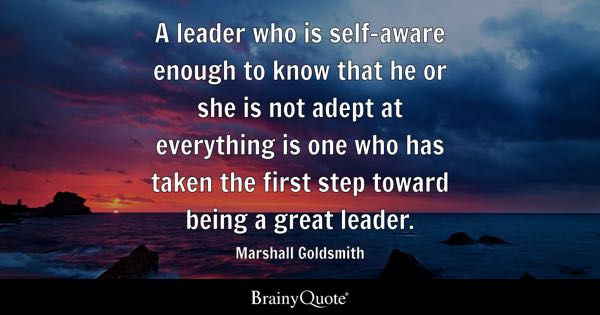
No one person has all the answers, sees every risk, every opportunity or every perspective. That is precisely why teams exist. And asking for help is a key behaviour exhibited by great leaders – and again, Marshall Goldsmith agrees:
A lesson I am still learning
I wish I could tell you that I have mastered this. I haven’t. Which is pretty true of most human behaviours – they need to be regularly and continually practiced.
I still find it easier to help than to ask. I still catch myself saying “I’m fine” when I’m not. To not accept the beautiful, kind and generous offers of support I receive when I really know I should. I still occasionally convince myself that I should be able to carry things on my own. But I am getting better.
Life has taught me that some things are simply too heavy to carry alone or to do alone. Not because we aren’t strong or capable enough. But because they were never intended to be carried that way.
It has also taught me, that I’m not so special that I have all the answers – I don’t! I don’t know everything, I cannot possibly have identified, thought through and considered all the perspectives.
For years I was paid to solve problems and provide answers. But the older I get, the more I realise that good decisions are rarely the product of one person’s thinking. They are usually strengthened by different perspectives, experiences and ideas. Asking for help doesn’t diminish our expertise, it often improves it.
I also realise that strength isn’t about needing no one. Strength is knowing how to recognise your limits, knowing when to reach out, and to trust others enough to let them in.
And perhaps real strength is understanding that giving and receiving are simply two sides of the same coin. You cannot have one without the other.
Some reminders
The next time you are working through something in your career, your organisation, your relationships or your life, and you find yourself hesitating to ask for help, perhaps remember these things:
∞ Asking for help is not a sign of weakness – it is a sign of self-awareness. It means recognising that you don’t have all the answers and that you don’t need to.
∞ People are often far more willing to help than we imagine. Most of us genuinely enjoy helping others and feel valued when we can make a difference.
∞ In organisations, asking for help is often how learning happens. It accelerates growth, broadens perspective and helps us avoid solving the same problem twice.
∞ The strongest teams are not those where everyone knows everything. They are the ones where people feel safe enough to ask questions, seek support and learn from one another.
∞ Asking for help creates connection. It allows others to contribute, strengthens trust and reminds us that we are part of something bigger than ourselves.
Closing thought
Perhaps asking for help is one of the most misunderstood forms of strength. Not because it highlights what we cannot do, but because it acknowledges something profoundly human. That we all need support, connection, and each other.
The reality is that none of us get through (nor should we get through) our careers, our relationships or our lives, alone. We need support and input from family, friends, mentors, colleagues, neighbours, professionals and, at times, complete strangers. The people who help shape our journey often do so because we gave them the opportunity.
So, if you are carrying something heavy right now, you are feeling stuck or lost, or you think you have to figure out something all by yourself, perhaps this is your gentle reminder.
You don’t have to do it alone – you never were meant to. Reach out! You never know what amazing things might happen when you just ask.
About “The Power of…” newsletter series
These newsletters are a way for me to share practical reflections, insights and tools on what really matters – the small shifts that can make a big difference to career, life and legacy.